
The 6-member Monetary Policy Committee, headed by Reserve Bank of India Governor Urjit Patel, in its fifth bi-monthly review, kept the repo rate unchanged at 6 per cent and reverse repo at 5.75 per cent.

The mutual fund industry continued with the positive momentum in the September quarter, attracting Rs 34,765 crore, although it was a massive reduction as against the Rs 1.85 lakh crore inflow in the preceding quarter, primarily due to withdrawal from debt segment. Most of the asset classes saw net inflows during the July-September period of the current financial year barring the fixed-income or debt segment, which witnessed net outflows. Overall, flows started on a strong note during the quarter under review, with net inflows of Rs 82,467 crore in July, which dipped to Rs 16,180 crore in August and ended with a disappointing Rs 63,882 crore of net outflows in September, according to a report by Morningstar India.

The parlous state of Asia's third largest economy was reflected in the rupee's 18 per cent plunge against the dollar to all time lows since May, when signals emerged that the US Federal Reserve was considering winding down an easy money strategy that had benefitted emerging markets like India.
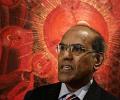
Central bank estimate economy to grow at 5.5 per cent.

Under the Fiscal Responsibility and Budget Management Act, the Centre should have eliminated the revenue deficit and brought down the fiscal deficit to 3 per cent of gross domestic product by March 2008. This target was extended by a year. Then, due to the global economic crisis, the government decided to suspend implementation of the FRBMA. As a result, the fiscal deficit for 2008-09 crossed 6 per cent of GDP and is projected at 5.5 per cent in fiscal 2009-10.
Prime Minister Manmohan Singh has urged the world economies to continue with stimulus packages till 2010 and avoid all kinds of protectionism including in the financial sector to battle the global economic slowdown.

Speaking at CNBC TV 18's business leadership awards event, Sitharaman made it clear that she was not expecting a jump in the number either.
India is set to attract foreign direct investment of $40 billion in fiscal 2008-09 with overseas investors betting big on the manufacturing sector in the world's second fastest growing economy.

After raising interest rate by a cumulative 250 basis points in 11 months, the Reserve Bank of India (RBI) on Thursday unexpectedly kept benchmark rate unchanged as global banking woes added uncertainty to the economic outlook. Five out of six members of MPC voted to remain focused on the withdrawal of accommodation to ensure inflation aligns with target while focusing on growth, RBI Governor Shaktikanta Das said on Thursday. The Monetary Policy Committee of the central bank decided to take a pause after a rate hike seen in previous six consecutive policies.

With high prices remaining a concern, Prime Minister's Economic Advisory Council chairman C Rangarajan on Wednesday said all policy measures, like rate hikes and intervention in grain markets, will be undertaken to bring down inflation to comfort zone of 4-5 per cent.

Bimal Jalan, has recommended to the government that it cut fiscal deficit to 3.6 per cent of the GDP during 2015-16.

'It is far too early to celebrate the numbers.' 'They are still fairly weak compared to the pre-pandemic level.'
Governments in economies of all sizes and at all stages of development are struggling with the tax policy choices available to them.

By any economic theory or doctrine, this is no Budget that supports economic recovery, whether through supporting aggregate demand, or through expansionary stimulus, declares Rathin Roy.

S&P Global Ratings on Monday kept its forecast for India's economic growth unchanged at 6 per cent in the fiscal year starting April 1, before rising to 6.9 per cent in the following year. In the quarterly economic update for Asia-Pacific, S&P saw inflation rate easing to 5 per cent in 2023-24 fiscal, from 6.8 per cent in the current financial year. It saw India's gross domestic product (GDP) likely growing by 7 per cent in the current financial year ending March 31 (2022-23), before slowing to 6 per cent in the next 2023-24 fiscal.

India should become a middle-income country and then push to make INR (rupee) a hard currency, and till then, it must promote the settlement of global trade in the local currency, think tank GTRI said on Sunday. Global Trade Research Initiative (GTRI) said that transforming a currency into a hard currency is a complex process that hinges on several pivotal factors. Firstly, economic stability is paramount; a country must exhibit low and stable inflation, consistent growth, and a balanced trade environment.

Modi launched a scathing attack on the Congress alleging that the opposition party has become outdated and has always been against any kind of reservation.
The government should focus on growth, inflation management, fiscal policy and relationship with the Reserve Bank of India, according to RBS.
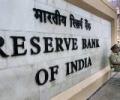
The Reserve Bank of India on Friday said it will come out with its annual monetary policy for the next fiscal on April 20, amid expectations that the central bank will hike interest rates to tame the rising inflation

Growth is the only way poverty can be reduced, says JPMorgan Chase's Jahangir Aziz.

Rajan strongly defends RBI's decision to hold the key rates in the absence of any new data points.

Fitch Ratings on Tuesday retained India's economic growth forecast at 7 per cent for the current fiscal, but cut projections for the next two financial years saying the country is not impervious to global developments. In its December edition of the Global Economic Outlook, Fitch projected India's GDP to grow at 7 per cent in the current fiscal, at a slower rate of 6.2 per cent in 2023-24 and at 6.9 per cent in 2024-25. In September, Fitch projected 7 per cent growth for the current fiscal, followed by 6.7 per cent in 2023-24 and 7.1 per cent growth in 2024-25.

Retail inflation jumped to a 15-month high of 7.44 per cent in July as prices of vegetables and other food items spiked, according to official data released on Monday. The Consumer Price Index (CPI) based inflation was at 4.87 in June and 6.71 per cent in July 2022. Previously, high inflation was recorded at 7.79 per cent in April 2022.

The Reserve Bank (RBI) resisted a 'raid' planned by some in the government to extract Rs 2-3 lakh crore from its balance sheet in 2018 to meet populist spending in run-up to general elections, Viral Acharya, who was deputy governor at RBI at that time, has written.

The RBI expects change, presumably commencing in the next Budget, but must hold its current view until this actually happens.

Lead indicators suggest that domestic current account deficit (CAD) is likely to reduce in 2023, while macro-economic stability has received a boost from inflation being brought back to the official tolerance band, according to the Reserve Bank of India's (RBI's) January 2023 Bulletin. "With the merchandise trade deficit reaching an all-time high of $83.5 billion in a quarter, and a rise in net outgo from the income account, the current account deficit increased to 4.4 per cent of GDP in Q2FY23," the State of the Economy article in the bulletin said. "It is noteworthy, however, that the CAD for Q1 was revised down from 2.8 per cent to 2.2 per cent on account of downward adjustment in Customs data.
At the same time, banking sources close to the development said the central bank could raise its growth target from 5-6 per cent to 6.5 per cent to accommodate the impact of an improving monsoon and the growth impetus provided through various fiscal and monetary stimulus packages earlier in the year. The cautious outlook on interest rates is primarily to accommodate rising inflationary expectations in the economy.

Moody's Investors Service on Wednesday raised India's economic growth estimate for 2023 to 5.5 per cent from 4.8 per cent pegged earlier, on the back of a sharp increase in capital expenditure in the Budget and a resilient economic momentum. It however revised downwards India's growth estimate for 2022 to 6.8 per cent from 7 per cent pegged in November last year. In its February update to Global Macro Outlook 2023-24, Moody's raised the baseline 2023 real growth projections "meaningfully" for several G20 economies, including the US, Canada, the Euro area, India, Russia, Mexico, and Turkiye, accounting for a stronger end to 2022.

India's economy is projected to slow to 6.5 per cent in the fiscal year starting April but will remain the fastest growing major economy in the world as it fared better in dealing with the extraordinary set of challenges the globe has faced, the Economic Survey 2022-23 said on Tuesday. India's gross domestic product (GDP) growth of 6.5 per cent in 2023-24 compares with an estimated 7 per cent expansion in current fiscal year (April 2022 to March 2023) and 8.7 per cent in the previous year. Like the rest of the world, India too faced an extraordinary set of challenges in tightening financial conditions and supply chain disruptions from a prolonged war in Europe but "withstood them better than most economies", the annual document detailing the state of the economy said.

RBI's interest rate decision, macroeconomic data and global trends would dictate terms in the equity market in a holiday-shortened week, analysts said. Besides, the focus will also be on foreign portfolio investors' trading activity, they added. Equity markets will remain closed on Tuesday for 'Mahavir Jayanti' and on Friday on account of 'Good Friday'.
With only three days to go before Finance Minister P Chidambaram delivers the Budget in Parliament, market expectations with respect to reforms are running high.

'While the Budget would be growth-friendly, it would not come at the expense of an increase in the fiscal deficit.'

'Limited spillovers' to Asia's third-largest economy, even as world 'perilously close' to recession.

The move is expected to create space for more budding entrepreneurs in the country to be eligible for self-certification, relaxed public procurement norms, rebate in patent filing, start-up funding, investment and easier closure compliance.

When we look at the pension expenditure of the states, so far, there has been no gain from the NPS reform. Pension expenses as a share of total state revenue expenditure rose from 4% in 1991-1992 to 10% at the time of the NPS reform, and have risen further to about 12%, observes Ajay Shah.

Manufacturing activities in India touched a three-month high in March boosted by faster expansions in new orders and output amid demand resilience and easing of cost pressures, according to a monthly survey. The seasonally adjusted S&P Global India Manufacturing Purchasing Managers' Index (PMI) rose from 55.3 in February to 56.4 in March, signalling the strongest improvement in operating conditions in 2023 so far. The March PMI data pointed to an improvement in overall operating conditions for the 21st straight month.
Indian growth in the rest of this fiscal year and next will be propelled by robust domestic consumption as consumer confidence improves, and by investment, including large increases in government capital expenditure, according to the Asian Development Outlook September 2023. "As slowing exports could foment headwinds for the economy, and erratic rainfall patterns are likely to undermine agricultural output, the growth forecast for FY2023 is revised down marginally to 6.3 per cent," ADB said.

'Recent underperformance notwithstanding, equities should constitute a major part of investors' financial portfolio.'

The higher salaries and pension outgo will be equivalent to about one per cent of the GDP.

Kotak Mahindra Bank was the biggest loser in the Sensex pack, sliding 2.68 per cent, followed by Tech Mahindra, Mahindra & Mahindra, Axis Bank, Hindustan Unilever, Tata Motors, Tata Consultancy Services, Bajaj Finserv, Bajaj Finance, Nestle and Titan. In contrast, NTPC, Power Grid, Larsen & Toubro, HDFC, Reliance and HDFC Bank were the gainers.
 © 2026 Rediff.com - Advertise with us - Disclaimer - Privacy Policy - Sitemap - Feedback - About us - Terms of use - Grievances